


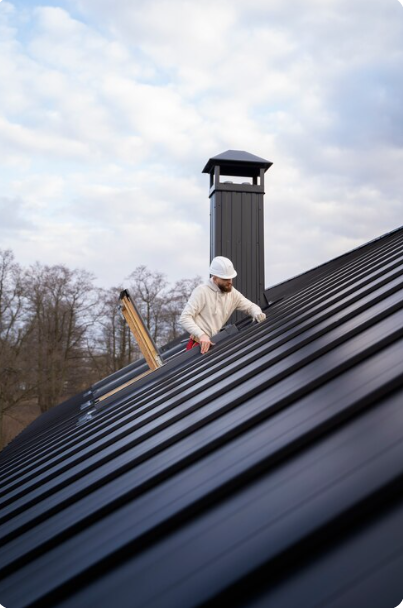
Furnace and hot water tank already switched to high-efficiency venting? That old brick stack on your roof might not be doing anything except leaking.
Walk through a lot of Calgary neighbourhoods built between the 1960s and the 1990s and you will see the same thing on roof after roof: a masonry chimney sticking up through the shingles, doing nothing. Somewhere along the way, the furnace got replaced with a high-efficiency unit that vents through a small PVC pipe out the side wall. The hot water tank followed, or got swapped for a tankless unit that vents the same way. The chimney that used to carry both appliances just sits there now, still poking through the roof plane.
Homeowners tend to assume an idle chimney is harmless. It is brick, it is not doing anything, so it cannot be causing a problem. That is backwards. A chimney is a large penetration through your roof deck, held watertight by flashing that needs maintenance and mortar that needs repointing. When nothing is using it anymore, nobody thinks about that maintenance, and it becomes one of the most common leak sources on roofs over twenty years old. If a reroof is already on your calendar, this is the moment to deal with it properly instead of paying to flash around a chimney that serves no purpose.
Why So Many Calgary Homes Have an Orphaned Chimney
Furnace conversions in Calgary accelerated once high-efficiency condensing units became the standard replacement choice. Those furnaces push exhaust out through sealed plastic pipe, typically through a side wall a few feet off the ground, because the exhaust is cool enough not to need the draft a chimney provides. Hot water tanks followed the same pattern as tank-style units got replaced or supplemented by tankless systems.
The result is a masonry or metal chimney that used to be functional infrastructure and is now, structurally speaking, just a box of bricks poking through your roof. Nobody removed it at the time of the furnace swap because removal was not part of that job. The HVAC contractor capped the old flue connection inside the house and left the exterior chimney exactly as it was, and it is still there, still needing flashing, still collecting nobody’s attention.
An Unused Chimney Is Still a Hole in Your Roof
This is the part homeowners miss. The chimney does not need to be actively venting anything for it to be a liability. The flashing where it meets the roof deck, usually step flashing along the sides and a counter-flashing or cricket at the back, is a wear item. It moves slightly as the house settles and as temperatures swing through Calgary’s freeze-thaw cycles, and eventually it opens a gap.
Add in mortar joints on the exposed brick, which erode from Chinook freeze-thaw cycling, plus a cap or crown that was never designed to last the life of the house, and you have a penetration that needs periodic attention indefinitely, for an appliance connection that no longer exists. Leave the chimney in place without addressing any of this and you are signing up to maintain flashing around a structure that provides zero function.
Your Three Honest Options
When a chimney has been decommissioned, there are three real paths forward, and a straight answer up front is worth more than a sales pitch. Here is how they actually compare.
- Full removal to below the roof deck: the chimney comes out entirely and the roof plane is decked over and shingled as if it were never there. Most complete fix, most involved option, since it touches the attic and insulation.
- Removal to the roof line with a proper cap: the portion above the roof comes off, and what remains is capped and flashed as a low, sealed stub. Costs less than full removal, still eliminates most of the flashing headache.
- Keep it and reflash it properly: for a future wood stove, appearance, or budget. New step flashing, a new cap or crown, and repointing any failing mortar, done at the same time as the reroof.
None of these is automatically right for every house. It depends on budget, whether you might reinstall a wood-burning appliance, and how much of an eyesore the chimney has become. A roofer who has looked at your attic and framing can tell you which makes sense.
Why Doing This During the Reroof Saves You Real Money
Chimney removal as a standalone project means a crew mobilizes just for that job: scaffolding or ladders, tearing into the roof around the chimney, patching the deck, matching shingles that have weathered for years since the original install, and cleaning up. All of that overhead gets paid for once, on a single project.
Do the same removal during a reroof and most of that setup is already happening. The old roof is already coming off, the deck is already exposed for repair, and the new shingles going down around the infilled area are brand new material from the same batch, so there is no colour mismatch from matching aged shingles years later. If a chimney has been sitting unused for a while and a reroof is already on the calendar, this is close to the cheapest window you will get to deal with it.
What Happens Inside: the Chase, the Ceiling, and the Attic
Full removal does not stop at the roofline. Most chimneys have an interior chase, a boxed-in enclosure running down through the attic, that housed the flue pipe. Once the chimney above the roof comes off, that chase is either removed down through the attic or capped off and left in place, depending on what is practical for your framing.
If it is removed through the attic, expect the crew to patch the attic floor and restore insulation where the chimney used to interrupt it (chimneys create a gap in attic insulation that has likely been leaking heat for years, contributing to attic frost). If the original chimney served a fireplace with a firebox downstream inside the house, that is a separate conversation and usually not part of a roofing scope. Ask your roofer directly what their removal includes below the deck, so there is no surprise about an unfinished chase later.
Structural and Permit Considerations
A masonry chimney can weigh a significant amount, and depending on your home’s framing, it may be partially self-supporting or partially carried by the roof structure. Before any removal, a competent contractor checks how the chimney is supported so cutting it down does not leave a load path unaccounted for. This is usually a straightforward visual assessment, but it should happen before work begins, not after.
The City of Calgary generally requires a permit for structural alterations, and removing a chimney through the roof deck and framing can fall into that category depending on scope. A straightforward reflash typically does not trigger the same requirement. Ask your contractor whether your specific project needs a permit, and be wary of anyone who says it is never needed regardless of scope.
When the Chimney Still Needs to Stay
Not every chimney on a Calgary roof is dead weight. An active wood-burning fireplace or wood stove needs a functioning chimney by code, and removal is off the table unless you are also removing the appliance. Some gas fireplaces are also chimney-vented rather than direct-vent through a wall, and those need the flue to stay in service too.
Before assuming your chimney is a candidate for removal, confirm what it is connected to. Look for any appliance with a metal flue pipe running into a chimney chase, not just a plastic vent pipe out a wall. A roofer or HVAC technician can trace it in minutes, and paperwork from your furnace or hot water tank installation usually confirms how the old appliance was disconnected.
Sometimes an old chimney was capped off years ago without longevity in mind: a flue stuffed with insulation, mortar crowns never repaired, or flashing untouched since the original build. Water stains on the attic side of the chase or daylight where it meets the deck are signs the sealing has already failed, worth flagging the moment you spot them.
Decide Before the Crew Shows Up, Not After
The worst outcome here is not choosing removal versus keeping the chimney. It is not deciding at all, and letting a roofing crew default to whatever is fastest on install day. Before your reroof starts, walk your attic if you can, figure out what the chimney is connected to, and get a straight answer on what each option costs for your house.
This decision fits naturally into a broader conversation about what your roof needs overall. If you have not had a full look at your roofing plan, that conversation about residential roof installation options in Calgary is the right place to raise the chimney question too.
About the author: this article was contributed by Angel’s Roofing, a Calgary residential roofing company. Angel’s Roofing is COR certified with a full-time safety coordinator on staff, and is a member of the Alberta Allied Roofing Association (AARA).
