


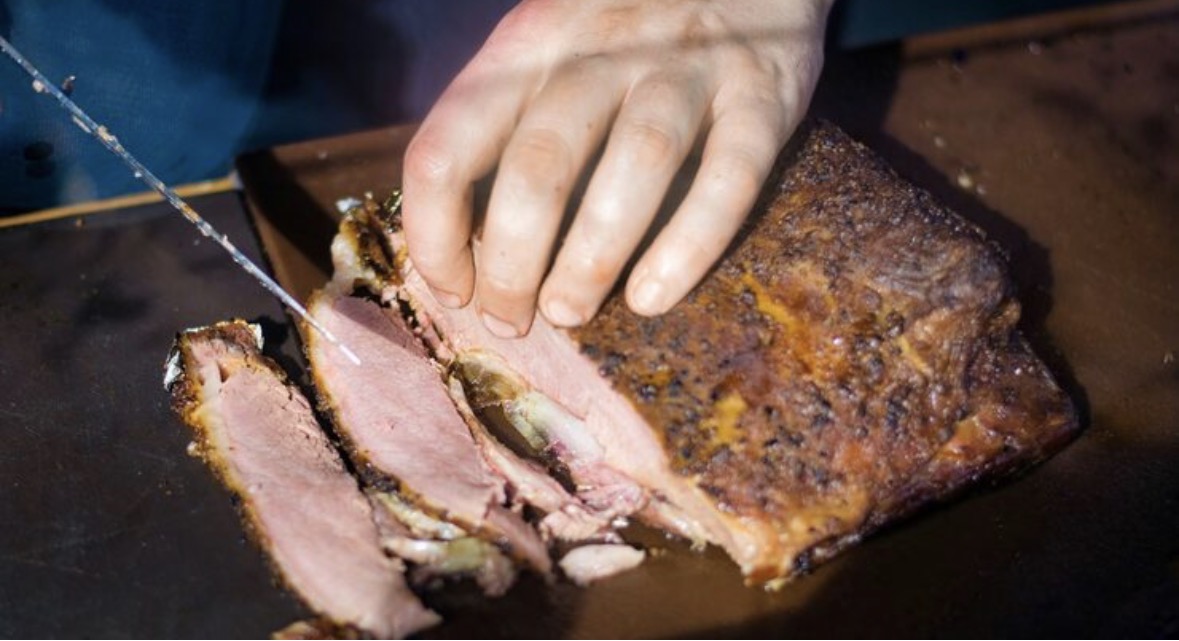
A sliced piece of smoked meat presents several clues at once: a dark crust, a pink band near the edge, glistening juices, rendered fat, and a particular grain. These details shape expectations before the first bite, but they do not all mean what diners assume. Color may result from smoke chemistry, seasoning, pigments, lighting, or cooking method, while tenderness and safety require separate evaluation.
Someone searching for ribs near me may use photographs to narrow the options, yet a strong image cannot reveal whether the surface tastes balanced or the meat has been handled safely. Learning what bark and smoke rings actually represent makes visual comparison more useful. It also prevents common mistakes, such as treating pink color as proof of undercooking or assuming a black exterior must be burned.
How Bark Develops During a Long Cook
Bark is the seasoned outer layer created as surface moisture evaporates and ingredients concentrate. Salt, spices, proteins, smoke particles, rendered fat, and browning reactions all contribute. It is not a separate coating in the way breading is. The crust remains connected to the meat, and its texture evolves as heat moves inward and the surface repeatedly dries, absorbs moisture, and dries again.
The Maillard reaction, a family of reactions between amino acids and reducing sugars, contributes roasted flavors and brown color when surface conditions are favorable. Caramelization can also affect sugar-containing rubs, although the processes are not identical. Smoke adds compounds that deepen aroma and color. Because several reactions overlap, there is no single bark temperature or ingredient that guarantees the same outcome on every cut.
Air movement matters because evaporation helps set the crust. A crowded cooker, pooled liquid, or frequent spraying can keep the surface soft. Conversely, excessive heat and dry airflow can harden the exterior before the interior becomes tender. Spritzing, mopping, or wrapping should therefore answer a specific observation. Adding liquid by habit may wash away seasoning or delay bark without improving the final texture.
Why a Smoke Ring Looks Pink
Fresh meat contains myoglobin, a pigment whose color changes with oxygen, heat, acidity, and chemical reactions. During wood or charcoal combustion, gases including nitric oxide can reach the cool, moist surface and interact with myoglobin. That interaction can stabilize a pink tone near the edge before heat changes pigments deeper in the meat. The resulting band is commonly called a smoke ring.
Ring depth varies with starting temperature, surface moisture, fuel, airflow, salt, and exposure time. A colder piece may remain in the reactive temperature range longer, while a dry or rapidly heated surface may set sooner. Some curing salts can produce a similar pink appearance through related chemistry. For that reason, the ring demonstrates conditions at the surface, not a precise quantity or quality of smoke absorbed.
A broad ring can look attractive in competition photographs, but it is not a dependable flavor score. Aromatic smoke compounds and ring-forming gases do not behave identically. Meat can carry pronounced smoke flavor with a modest ring, and a vivid ring can accompany an unbalanced exterior. Tasting should focus on pleasant aroma, clean finish, seasoning, and integration between crust and interior.
Separate Color From Food-Safety Decisions
Color is especially unreliable in smoked meat because the cooking environment intentionally alters pigments. Poultry can retain pink tones, pork may show a rosy edge, and beef can change from red to brown at different temperatures depending on chemistry. The USDA guidance on meat color explains that appearance alone does not establish doneness and recommends using a food thermometer to verify safe internal temperature.
Thermometer placement affects the reading. The sensing area should reach the thickest relevant portion without touching bone, a cooking grate, or a large pocket of fat. Thin cuts may require inserting the probe from the side. Check more than one location when thickness varies. A clean, calibrated thermometer provides evidence that a photograph, juice color, or cooking timer cannot provide.
Safe minimum temperature and preferred tenderness are related but distinct. A tough cut may pass a safety threshold before collagen has softened enough for the intended texture. Continued cooking can be a quality decision, while the applicable safe-temperature guidance remains the baseline. Resting can also allow temperatures to equalize and juices to redistribute, but it should not be used to excuse an unverified cooking process.
Track Moisture Through the Cooking Process
Raw muscle contains substantial water held within a network of proteins. Heat causes those proteins to change shape and squeeze out moisture. At the same time, fat renders and collagen gradually converts into gelatin. What diners perceive as juiciness therefore comes from several sources. A tender bite can feel succulent because of gelatin and rendered fat even after the cut has lost considerable water.
The stall occurs when evaporative cooling offsets part of the heat entering the meat, causing internal temperature to rise slowly. It is not a sign that the cooker stopped working. Wrapping reduces evaporation and can shorten this phase, but trapped steam softens the crust. Paper is more breathable than foil, though both alter the cooking environment. The best choice depends on schedule and texture priorities.
Resting reduces the temperature gradient between exterior and center and gives hot juices time to become less mobile. Cutting immediately can release more liquid onto the board. Rest length should match the size and holding method; a small rack and a large shoulder do not need identical treatment. Food must also remain within safe holding limits rather than spending hours cooling gradually in an uncontrolled environment.
Read Rib Texture Without Expecting One Style
Rib tenderness exists on a spectrum. Some diners prefer meat that pulls cleanly from the bone while retaining a defined bite. Others prefer a softer texture that separates with minimal pressure. Both can be intentional, but dry, chalky meat and unrendered connective tissue indicate different problems. The style should be identified before interpreting whether a particular rack is underdone or overdone.
Visual tests can help when combined. As a rack bends, the bark may crack at the surface; exposed bone ends may become more prominent; and a toothpick or probe can meet decreasing resistance between bones. None of these cues independently guarantees safety. They are quality signals used after temperature control and hygienic handling have already been established.
Sauce can change perception by adding moisture and dissolving some crust. A glossy finish may look juicy even if the interior is dry, while a dry-rubbed rack can remain succulent without visible glaze. When evaluating bbq, taste a section that includes bark, interior meat, and rendered fat. That combination reveals balance more accurately than sampling sauce from the surface.
Use Sensory Cues as a Complete System
Begin with aroma. Clean wood smoke should suggest the fuel without stinging the nose or leaving an ashtray-like impression. Next examine whether the bark adheres and yields pleasantly. A crust that flakes off as dry powder may reflect an overly dry surface, while a paste-like coating can indicate trapped steam or sauce applied before the bark set.
Slice structure provides another clue. Meat should be cut across the grain when practical so fibers are shorter and easier to chew. A slice that bends before breaking often retains useful structure, while one that crumbles immediately may have cooked beyond the desired point. Pulled meat should separate into moist strands rather than become a uniform mash. These observations describe texture, not necessarily safety.
Finally, consider aftertaste. Bitter residue can come from dirty combustion, burned sugar, or excessive char. Heavy salt can suppress smoke nuance, while too much sweetness can make rich meat tiring after several bites. Well-made barbecue offers contrast: concentrated bark against a tender interior, smoke balanced by meat, and enough acidity or spice to keep each bite clear.
Conclusion
Serving conditions should remain part of the assessment. Fat firms as food cools, bark softens under trapped steam, and sliced surfaces lose moisture during a long hold. Comparing portions fairly means noticing how recently they were cut and whether they were held covered, sauced, or exposed. A sample that arrives later is not necessarily the product of a different cooking method; time between the cooker and plate can change several sensory cues at once.
For home cooks, notes and photographs are most useful when paired with measurements. Record cut thickness, grate temperature, wrapping point, rest length, and the placement of each probe. Then describe bite, aroma, crust, and aftertaste in ordinary language. This evidence helps separate a genuine process improvement from a result caused by a smaller rack, warmer weather, or a different holding period. It also encourages decisions based on patterns instead of one striking image.
Bark, smoke rings, and visible moisture are useful clues only when their limitations are understood. Bark reflects surface reactions, the ring reflects pigment chemistry, and juiciness reflects water, rendered fat, gelatin, cutting, and serving temperature. A thermometer remains the appropriate safety tool. For diners comparing traditional smoked meats in the Decatur area, LawLers can be referenced as one local place to experience these qualities firsthand.
